Insights — Helicon Defense
HELICON DEFENSE
Insights

Insights and Announcements

News, announcements, and updates from Helicon Defense on responsible allied defense technology transition.

Policy SignalJuly 1, 2026

Ukraine’s Defense-Tech Export Shift Makes Readiness the First Question

On 1 July 2026, the Cabinet of Ministers of Ukraine approved the country’s first transparent, unified mechanism for exporting Ukrainian weapons and defense technologies to partner nations. Prime Minister Yulia Svyrydenko, Defense Minister Mykhailo Fedorov, and National Security and Defense Council Secretary Rustem Umerov announced the framework the same day, positioning it as a controlled, revenue-generating extension of Ukraine’s wartime industrial base — not a rollback of priorities.

The framework is straightforward enough to summarize but consequential enough to reshape how Ukrainian innovators approach international partnerships:

  • Who can buy. Only countries with signed “Drone Deal” intergovernmental agreements can purchase Ukrainian weapons, technologies, and work directly with Ukrainian manufacturers. The Ministry of Foreign Affairs manages the approved-country list.
  • How it works. Manufacturers submit export applications; decisions are issued within 30 days — a reduction from the previous 90-day review. The mechanism applies to finished-goods transfers valued at 15 million UAH (~US$334,000) or more; the threshold does not apply to components.
  • What stays protected. Ukrainian intellectual property is transferred without assignment of ownership. Re-export or transfer to third parties requires Ukraine’s written consent. If products manufactured using Ukrainian technology are subsequently sold to another buyer, 20% of that value returns to the Ukrainian state budget.
  • How Ukraine benefits. Twenty percent of finished-goods export revenue and 30% of component-export revenue are directed to a special state budget fund for Ukraine’s defense industry.
  • The non-negotiable rule. Supplying the Armed Forces of Ukraine remains the absolute state priority. Export permits can be denied if the state needs the equipment on the frontline. A manufacturer may export only if it can simultaneously fulfill state defense contracts and export orders.
  • Duration. The mechanism operates for the full period of martial law, in effect since Russia’s February 2022 invasion.

The design is deliberate. As PM Svyrydenko put it: “Every export contract must serve one strategic goal: strengthening Ukraine’s defense industrial base and delivering more weapons for our Armed Forces.” The loop is intentional — export revenue funds the next generation of weapons Ukraine uses first, and the frontline remains the first customer.

What this changes for Ukrainian innovators and their allied partners

Two months ago, a Ukrainian manufacturer negotiating with a European or U.S. partner had to answer “can we even legally do this?” The answer was uncertain, the process was opaque, and the timeline for export-license review was measured in quarters. As of 1 July, the answer is now: yes, if you can prove readiness.

Readiness is now the first question. Not the last one.

Readiness under this framework is not a single test — it is a stack of demonstrable capabilities that any Ukrainian innovator will need to show to move a product into a partner country:

  • The ability to fulfill Armed Forces of Ukraine state defense contracts and export contracts simultaneously — without one starving the other.
  • A defensible IP position, since ownership does not transfer and re-export requires written Ukrainian consent.
  • Documented technical maturity sufficient to survive foreign-military evaluation, integration testing, and (eventually) prime-contractor diligence.
  • Clear evidence of compliance posture: export-control classification, end-use controls, and controlled-goods handling appropriate to the partner country’s regime.
  • An accounting infrastructure that can handle the 20% / 30% revenue-share obligation cleanly, and the follow-on 20% obligation if the partner re-exports finished product built on Ukrainian technology.

For allied partners — U.S. primes, European integrators, DoD program offices, ministries of defense in Drone Deal countries — the same shift applies from the other direction. Interest in Ukrainian battlefield-proven capability has been high for two years. Until now, the diligence risk of engaging directly was regulatory ambiguity. That ambiguity is largely resolved. What remains is the readiness question: is this specific Ukrainian innovator ready to be a supplier under U.S. or allied procurement standards?

That is the question Helicon Defense exists to answer.

Why export-readiness is credibility

A Ukrainian innovator who can demonstrate simultaneous state-contract and export-contract capacity, a clean IP position, a compliant export-control posture, and the accounting rigor to handle the state-budget revenue share — that innovator is not just legally permitted to export. That innovator is a credible supplier. The two states are the same state under this framework.

The inverse is also true. An innovator who cannot show these things is not export-ready, and every serious allied counterparty will read the gap the same way: this is a promising technology attached to a supplier who is not yet ready to be one. No amount of interest or urgency at the ministry level closes that gap. Readiness has to be earned.

This is exactly the transition-of-capability discipline Helicon was built to run: helping Ukrainian innovators become the credible supplier the new framework requires them to be, and helping allied counterparties evaluate readiness on standards they trust.

What happens first

For a Ukrainian innovator considering the export pathway, the sequence is the same regardless of the eventual partner country:

  1. Capability & Readiness Review. Independent assessment of technical maturity, IP position, state-contract capacity, and compliance posture against the new framework’s requirements.
  2. Gap plan. A specific, sequenced set of steps to close every gap the review identifies, with clear ownership and timeline.
  3. Partner-country lane selection. Alignment of the readiness plan with the specific Drone Deal partner country whose end-user and integration requirements match the capability.
  4. Application and diligence support. Preparation of the manufacturer’s export application, and the technical, legal, and financial diligence packages that partner-country counterparties will require in parallel.

The 30-day review clock does not start with the manufacturer’s application. It starts — effectively — with the readiness work that makes the application credible in the first place.

Sources: Reuters, 1 July 2026 · RBC-Ukraine, 1 July 2026 · UNITED24 Media, 1 July 2026 · Euronews, 1 July 2026.
Field ReportJune 26, 2026

Helicon Defense at the Ukraine Recovery Conference and Defence Day, Gdańsk

Helicon Defense was on the ground in Gdańsk this week for the Ukraine Recovery Conference and Defence Day, joining international partners focused on Ukraine’s recovery, resilience, and defense innovation. Co-hosted by Poland and Ukraine on June 25–26, URC 2026 brought together government, industry, finance, and technology stakeholders at a moment when reconstruction and security have become inseparable.

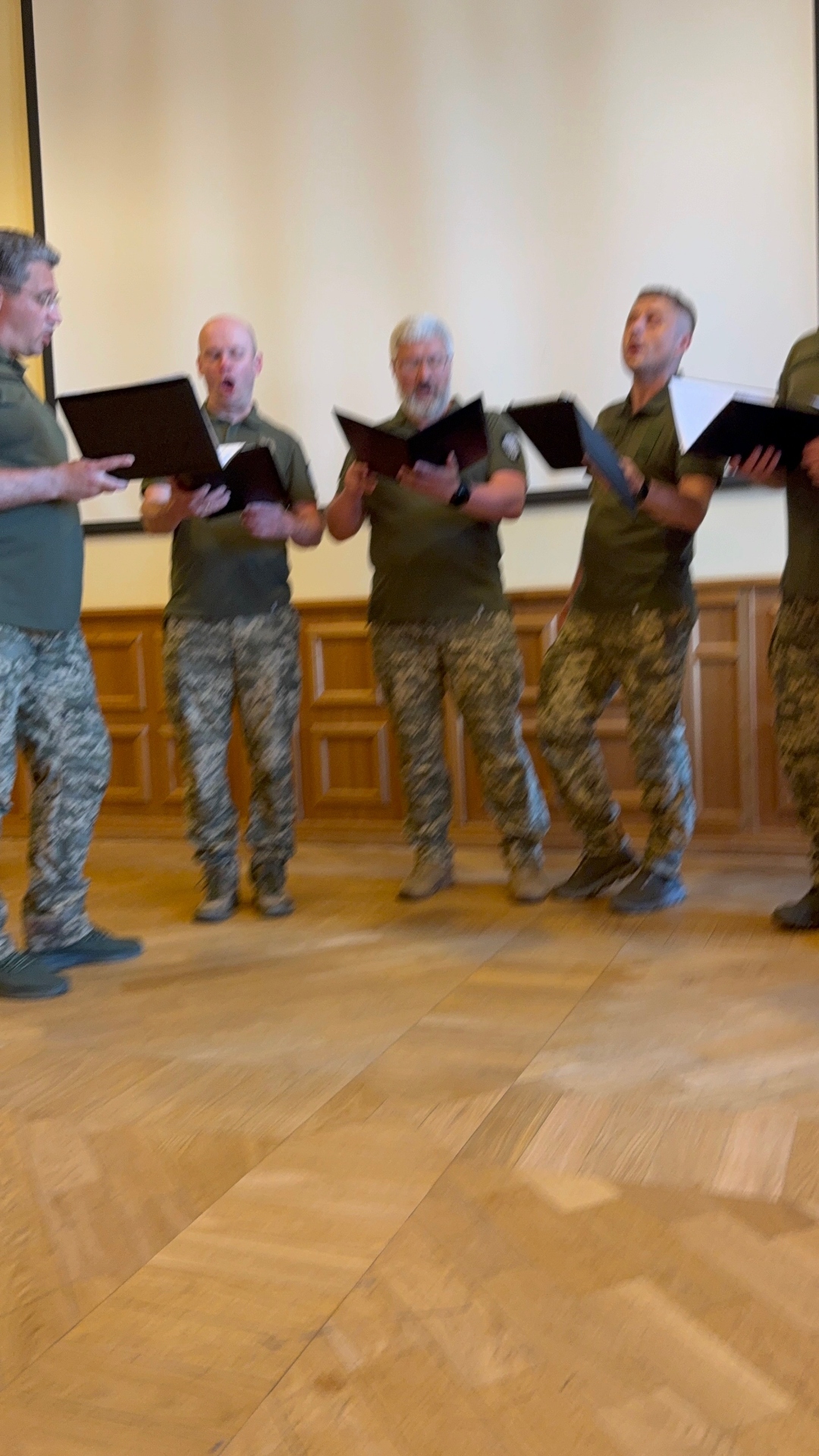
Plays twice, then stops. Use the controls to replay.

Cultural Desant (Cultural Forces of Ukraine) — the Ukrainian Armed Forces cultural unit of soldier-musicians — performing during Defence Day at the Ukraine Recovery Conference, Gdańsk. Shared with permission.
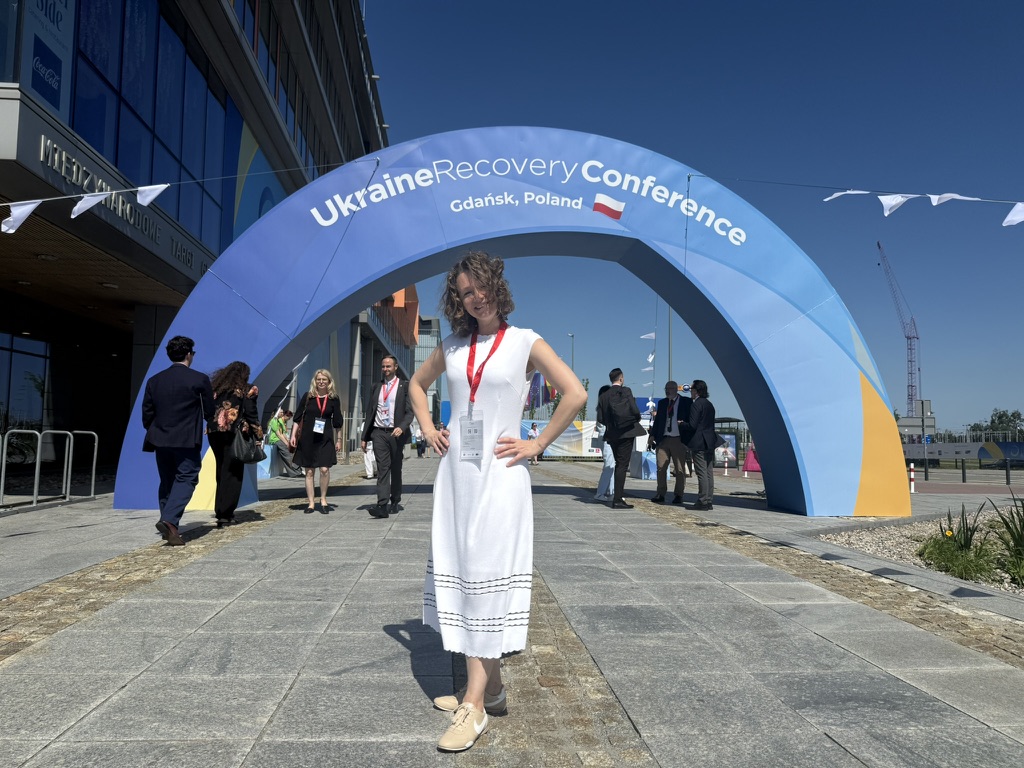
Helicon Defense at the Ukraine Recovery Conference arch, Gdańsk, June 2026.
Gdańsk, Poland — Ukraine Recovery Conference 2026.

The headline numbers, as reported by Reuters and confirmed by the European Commission and the Ukrainian government, give a sense of the scale: Ukraine expected more than 160 agreements worth over €10 billion; a $3.39 billion agreement was signed with the World Bank; and the first €3.2 billion tranche of the EU’s €90 billion Ukraine Support Loan was transferred, with additional financing structures announced for reconstruction and strategic sectors. Defence Day was a dedicated track at URC for the first time, signaling that Ukraine’s defense industrial base is no longer a side conversation in recovery planning — it is a central pillar.

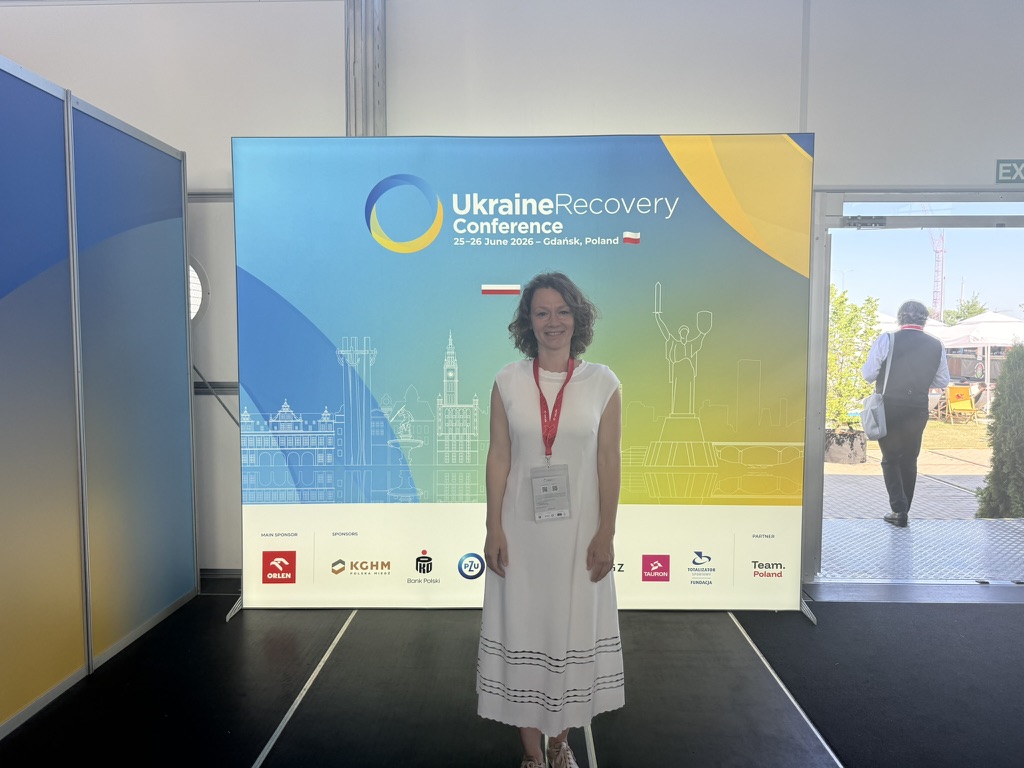
Ukraine Recovery Conference official backdrop, Gdańsk, June 2026.
Official Ukraine Recovery Conference backdrop, Defence Day.

The themes that recurred across the conference floor were practical: trusted manufacturing capacity, energy resilience under sustained attack, and the financing structures needed to turn battlefield-validated technology into enduring capability.

The strongest message from Gdańsk was practical: recovery cannot wait for perfect conditions. The work now is to help capable partners move faster, validate responsibly, and turn serious technology into real operational value.

— David Sherrer, Founder & CEO, Helicon Defense
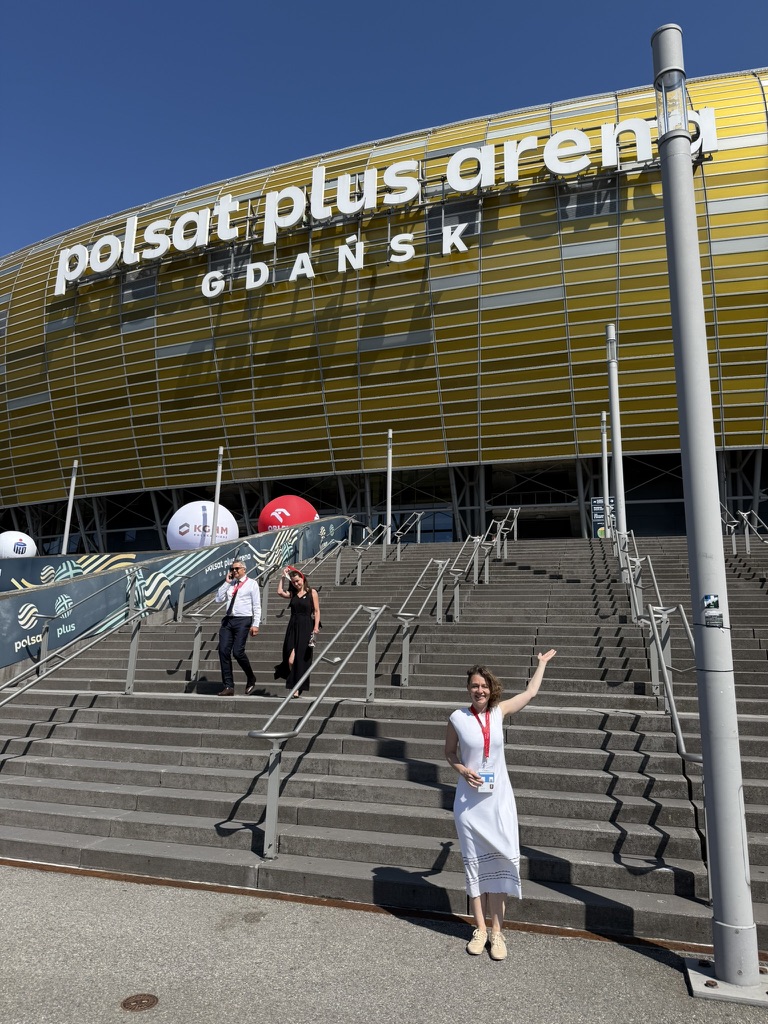
Polsat Plus Arena Gdańsk, venue for the Ukraine Recovery Conference 2026.
Polsat Plus Arena, Gdańsk — URC 2026 venue.

One signal worth noting: Ukraine and Kyivstar announced a memorandum of cooperation at the conference to build domestic AI computing capacity, with VEON providing financial backing for a first phase requiring on the order of 3–5 megawatts. Sovereign compute, sovereign data, and sovereign manufacturing are increasingly treated as one continuous defense problem.

Cultural Desant soldier-musicians performing at the Ukraine Recovery Conference Defence Day, Gdańsk, June 2026.
Cultural Desant performing at URC Defence Day, Gdańsk — soldier-artists of the Armed Forces of Ukraine.

One detail from the conference floor deserves naming. The vocal performance featured above is by Cultural Desant, the cultural unit of the Armed Forces of Ukraine. Founded in June 2022 by musician and Armed Forces officer Mykolai Sierga, the unit has grown into an integrated platform — Cultural Forces — with more than 80 soldier-artists, the vast majority with frontline combat experience. The group has delivered over 4,500 performances at frontline positions, military hospitals, training centers, and de-occupied territories, and conducted international tours including a Tour of Gratitude across the United States. They are, as the Los Angeles Times described them, “Ukraine’s USO,” with the difference that every member is a serving soldier. That a Ukrainian military cultural unit was given the floor at URC Defence Day in Gdańsk is itself a signal: culture, identity, and morale are not adjacent to defense — they are part of it.

We leave Gdańsk encouraged by the seriousness, energy, and openness of the conversations, and grateful to the partners working across defense, security, reconstruction, and investment to support Ukraine’s future. The work continues.

Public reporting referenced in this post: Reuters — Ukraine expects to sign over €10 billion in deals; European Commission — First €3.2 billion instalment of the €90 billion Ukraine Support Loan; Reuters — Ukraine’s domestic AI computing capacity with Kyivstar. Imagery and video on this page are Helicon Defense’s own.

AnnouncementJune 23, 2026

Helicon Defense begins URC 2026 outreach to support responsible allied transition pathways

Nataliya Meyer (Polyushkevych) is in Poland around the Ukraine Recovery Conference 2026 to support Helicon Defense’s outreach to Ukrainian and allied defense-industry stakeholders. Her focus is on listening, relationship-building, and identifying responsible pathways for IP protection, legal structure, allied manufacturing, and U.S./allied defense transition for qualified technologies.

Helicon Defense helps selected Ukrainian and allied defense technologies move from operational validation toward responsible U.S. and allied evaluation, manufacturing, and defense-customer adoption. The work spans IP protection, legal and commercial structure, export-control awareness, trusted supply-chain review, component localization, manufacturing-readiness development, demonstration planning, and defense-customer engagement.

Ukrainian innovators are solving urgent defense problems under real operational pressure. But moving those capabilities into U.S. and allied defense channels requires more than interest. It requires trust, (Intellectual Property) discipline, legal structure, compliance awareness, manufacturing realism, and a serious path to demonstration and adoption.

— David Sherrer, Founder & CEO, Helicon Defense

The Ukraine Recovery Conference 2026 is being held in Gdańsk on June 25–26. Helicon’s work around the conference focuses on the defense-industrial transition layer: helping selected Ukrainian and allied capabilities move from field validation toward protected IP structures, allied manufacturing readiness, trusted supply chains, and U.S./allied customer pathways.

Meeting availability: initial discussions are limited to non-confidential summaries. Sensitive, proprietary, export-controlled, classified, (International Traffic in Arms Regulations)-controlled, (Export Administration Regulations)-controlled, or (Controlled Unclassified Information) should not be shared until appropriate review, (Non-Disclosure Agreement), and disclosure procedures are established.

New ResourceJune 22, 2026

Updated innovator and U.S.-partner brief packages

Two updated brief packages are now available to qualified parties: a Ukrainian-language brief for innovators considering U.S./allied transition, and an English brief for U.S. partners evaluating allied-origin technology programs. Both reflect direct feedback from Ukrainian defense industry advisors on what an honest, originator-respecting transition platform should and should not promise.

Initial conversations are not a fee trap. Helicon does not ask for sensitive technical data at intake. Originators remain the decision-makers on their own technology.

Download the public overview one-pager (PDF)

↑ Back to top
Start the Conversation

Want to discuss a capability, partnership, or technology?

Helicon works with selected defense innovators, U.S./allied defense customers, manufacturing partners, and legal/compliance collaborators.