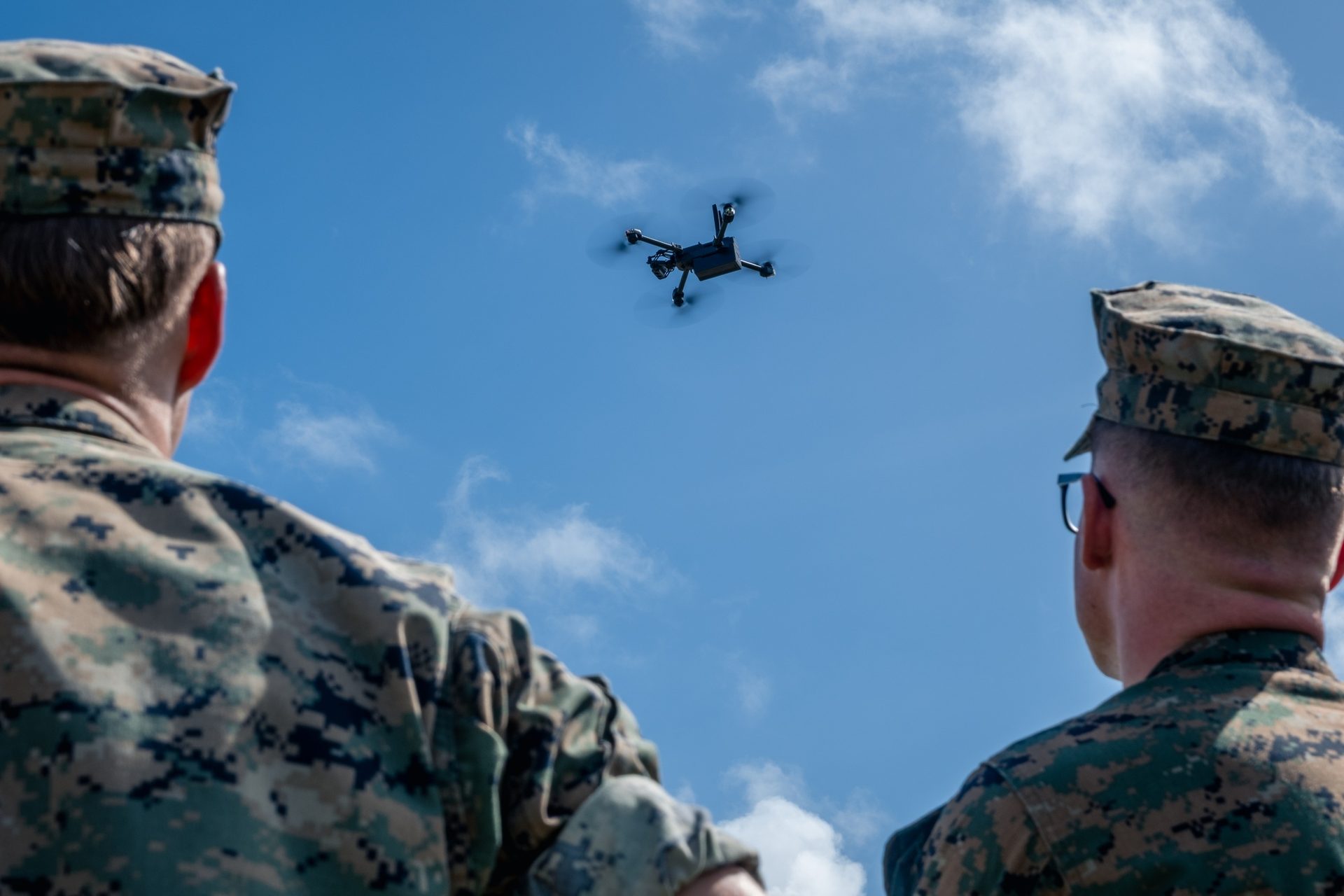
DESTROY THE KILL CHAIN.
Target the source, not the platform.
Passive RF targeting capability for small UAS. Operationally validated in active contested RF environments. Integrated with MAVLink / ArduPilot flight stacks.
Detection without localization is no longer enough.
Small-UAS proliferation has compressed the sensor-to-strike timeline while dispersing operators across cluttered RF environments. Existing counter-UAS systems frequently detect the aircraft without localizing the controlling emitter quickly enough for tactical response. The gap between detecting a drone and locating the operator behind it is where the kill chain breaks.
The core idea
Detection and targeting collapse into one motion.
Most architectures move from detect → process → handoff → task → locate. We make detection itself the targeting cue.
Passive RF Targeting
A passive sensor tunable across multiple bands of interest. No emissions. Picks out emitter signatures of interest in cluttered environments.
Operator-Level Targeting
Direction-of-arrival pushed to the autopilot. The pilot sees a live bearing cue and signal strength. Detection and targeting collapse into one motion.
Host-Agnostic Integration
Group 1-3 SWaP-compatible. UART / MAVLink / ArduPilot. Fits the airframes the maneuver unit already flies, plus tethered hosts for RF-denied environments.
Compact. Host-agnostic. Passive.
Helicon's payload lives on the airframes the maneuver unit already flies. Passive front-end. On-board signal processing. Real-time bearing to source. The aircraft stays silent in the RF spectrum — there is nothing to triangulate against.
Engaging with U.S. government sponsors, primes, and integration partners. Designed for integration into existing UAS, EW, and force-protection architectures. Technical detail — frequency coverage, mass and power, target signature set, integration data — is available to qualified U.S. government and prime-contractor partners under non-disclosure.
TRL 8 in operational field environments. TRL 6 for U.S.-stack integration, with a defined path to TRL 7 in coordination with a sponsor.
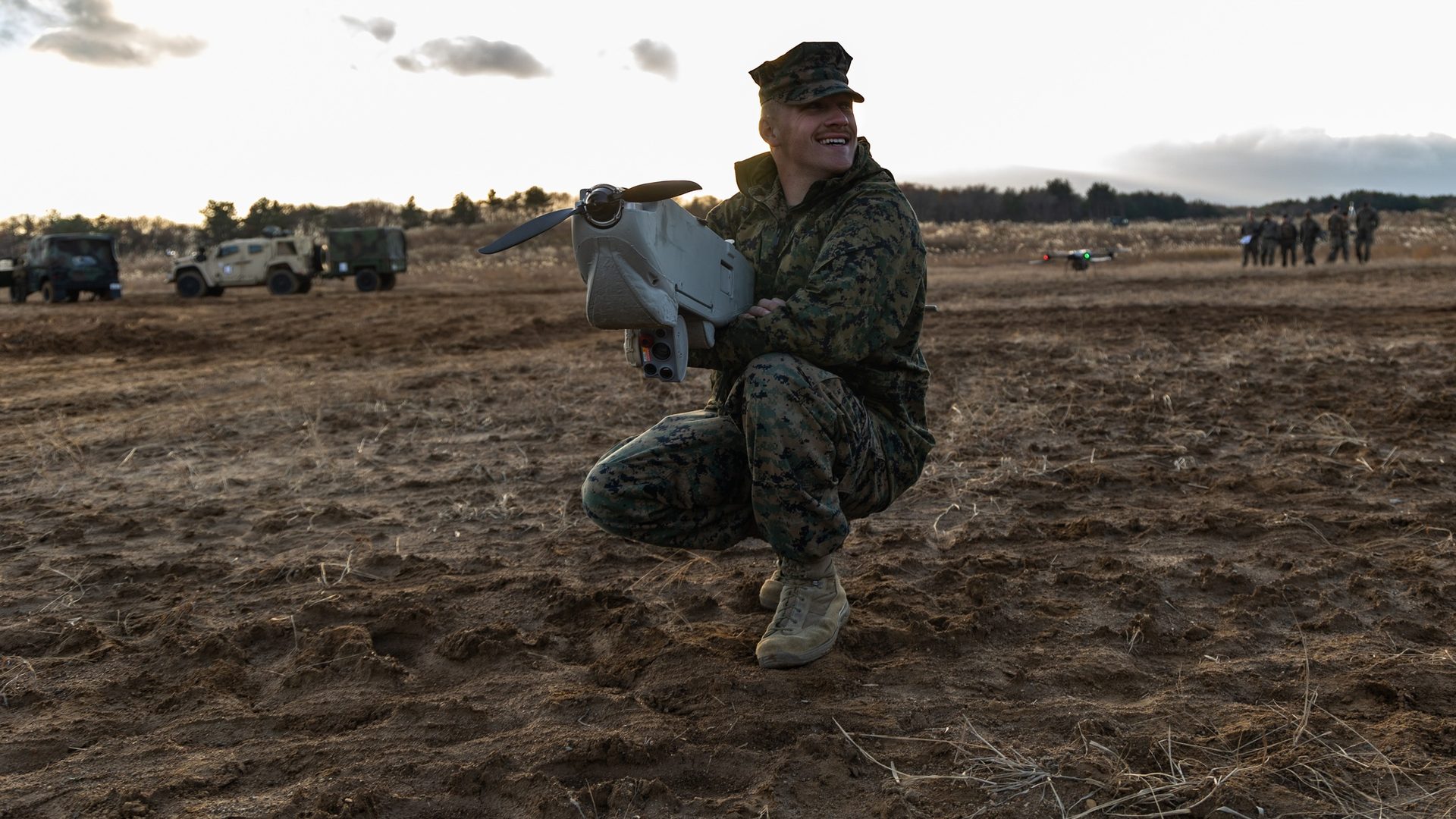
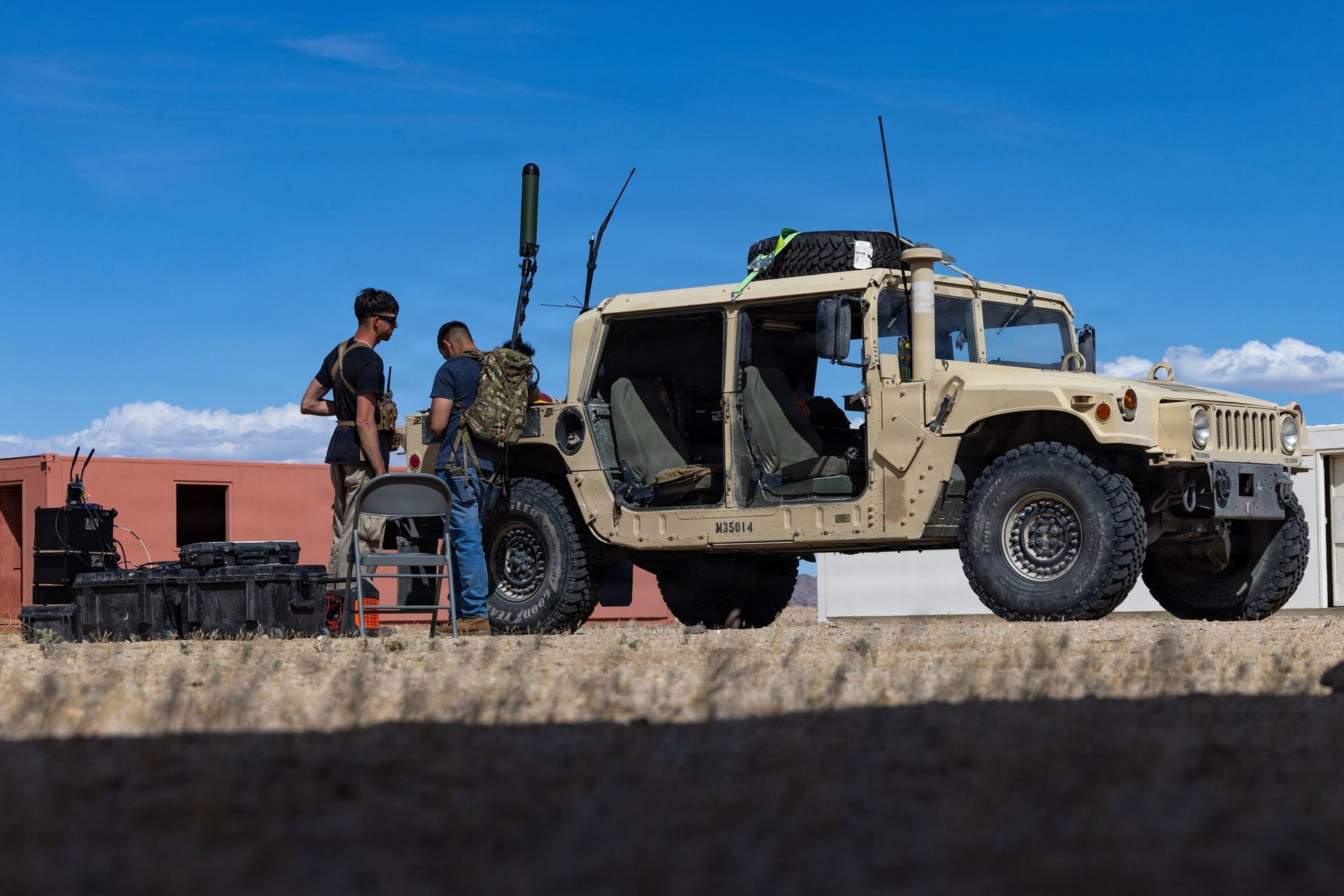
Vehicle-organic. Maneuver-organic. UAV-organic.
Designed to live where the maneuver unit lives. Small-UAS host overhead. Tethered host for RF-denied environments. Vehicle-mast deployments where the airframe is the persistent layer above the ground vehicle.
U.S. Marine Corps photo · public domain.
For qualified DoD program offices, primes, and partners.
Engagement
We engage with qualified DoD program offices, prime contractors, and partners on evaluation, integration, and co-development at sponsor facilities.
Acquisition pathways available via established defense contracting structures. Path to additional bands of interest in coordination with sponsor.
Contract vehicle
Active U.S. contract vehicle available today via an affiliated entity. CAGE and vehicle details provided to qualified partners under NDA.
Compliance & control
ITAR-aware. Qualified partners only. DoD acquisition framework aligned.
Public-facing material only. Technical detail — including capability brief, one-pager, and integration data — is available to qualified partners under non-disclosure. Request access →
Built by operators who’ve done it before.
Helicon Defense is led by David Sherrer, founder and CEO. Prior experience transitioning defense-electronics technology from funded R&D into deployed and acquired systems: founder & CEO of NuvoTronics (2008–2018, acquired by Cubic Corporation, fielded into U.S. defense programs) and Haleos (acquired by Rohm & Haas, 2002). Inventor of 125+ issued U.S. patents in RF and microwave packaging.
Helicon’s technical team brings deep RF systems engineering, autopilot integration experience, and field-validated operational test backgrounds in contested RF environments. Full technical team backgrounds and capability provenance are available to qualified U.S. government and prime-contractor partners under non-disclosure.
Request a technical discussion.
Government program offices, primes, and qualified partners — start here.
Request a technical discussion →